
A Country Gal’s Story
Waddling under the belly of a fat old milk cow initiated my love affair with bovines. Little did I know that sixty-nine years later, I’d write a book about them. As a one-year-old just learning to walk, my dad had taken me to the barn that day and introduced me to these massive ungulates. Luckily my mother didn’t learn about my misadventure until much later. Although I didn’t know it at that early age, I soon discovered that my father was the animal lover in our family while Mom merely tolerated the numerous critters that ultimately shared our lives.
The year before in 1937, on a frosty February morning, Mom and I had spent many long hours together until I decided to make my entrance into the bedroom of a farmhouse in Pomfret, Connecticut. For someone who ended up traveling and wanting to see the world, it still amazes me that I waited so long to drop into sight. Perhaps it was because I had a womb with a view.
I learned early on that my mother had a great sense of humor. She loved telling the story of her friend Margaret following her around with a mop after her water broke. Mom also shared that although she weighed only 110 pounds on her wedding day, by the time I came along a year and a half later, her 170 pounds made the barn scales a necessity.
Later in life when I appreciated the word history, I found it interesting that my rural hometown of Pomfret had been named after the old English town of Pontefract in Yorkshire, England. Years prior, the land had been purchased from Native Americans by a Major Fitch for thirty pounds and was known as The Mashmucket Purchase.
Mashamoquet Brook, one of numerous state parks in Connecticut, became a regular hangout for me and my teenage friends in the 1950s. An historic landmark in this park, The Wolf Den, was made famous by General Israel Putnam, who had served in both the French and Indian War and gained the name of “Old Put” in the Battle of Bunker Hill in the American Revolutionary War. Much earlier, however, he had distinguished himself in my hometown. When he and his neighbors suffered great losses of sheep, goats and poultry, Putnam tracked down the last wolf in Connecticut, crawling into its den three times before bringing it out to the cheers of his countrymen.
While Israel Putnam may have helped his neighbors dispose of a nuisance predator in 1742, today I, as a volunteer at a wildlife state park in Florida, think how sad to have celebrated the killing of the last of a species in my home state.
In May, 1938, when I was fifteen months old, I gained a baby sister. While I had given my mother lots of pain during her labor, I learned that Violet presented herself as an easy birth. I’d like to think that my birth was the only time I caused my mother pain but that probably wouldn’t be true. Mom told me that she’d always like the name Barbara, but I often wondered if she knew the meaning behind that name. Coming from the Greek word, barbarous, it meant strange or foreign. Unlike the name Violet, which meant soft and sweet and innocent, I was far from that. With my vivid imagination and questioning mind, I always looked for opportunities to investigate the unknown. By the time I was four years old, my maternal grandpa had nicknamed me chatterbox. And if truth be known, I’ve lived up to that nickname ever since.
Something else happened in 1938 that had a big impact on my life. That year, the Biro Brothers of Hungary opened a factory in Argentina to produce their first ball point pens. As a future author, ball point pens became an important part of my daily note-taking life. A leaky fountain pen never found its way home into my office.
By September of 1938, my parents had moved us to another small New England town called Hampton, which was described in an 1899 publication: “The future of this town is hopeful. No liquor is sold openly within its borders.” By the time I left Hampton in 1959, this was still true, and all these years later, it still remains a southern New England village without a tavern. Typically, it does have three churches, a general store, a firehouse, and a library. There used to be a barbershop, but when the barber died, he was never replaced. Twelve miles away now to get a haircut.
I’ve had haircuts in many places since then, including Seattle, Washington where I started my teaching career, Labrador, Canada where I soloed a Cessna 140, Bamberg, Germany where I met Ian, the love of my life, Canal Zone, Panama where I became an elementary school principal, Nairobi, Kenya where I realized my childhood dream of a safari, and Homosassa, Florida where we retired and where I published that first book, Cracker Cow, A Narrative of Florida history.
Traveling and writing have been a big part of my life since those wonderful days growing up in Connecticut. This year, my twelfth book was published and Jacob Joins the Cow Cavalry, set in Florida during the Civil War, also features cows. Although, I love all kinds of animals, cows will always be a favorite. I think my next trip should include the Gentle Farm in Tennessee where one can visit and get hugged by a cow. No waddling under a cow’s belly this time around, just cuddling instead. You can take the country girl to far away places but a bit of the country will always remain.
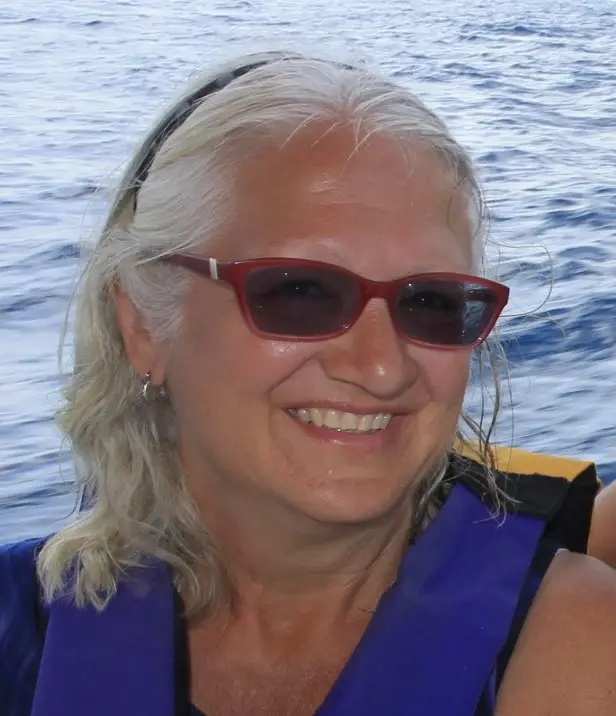
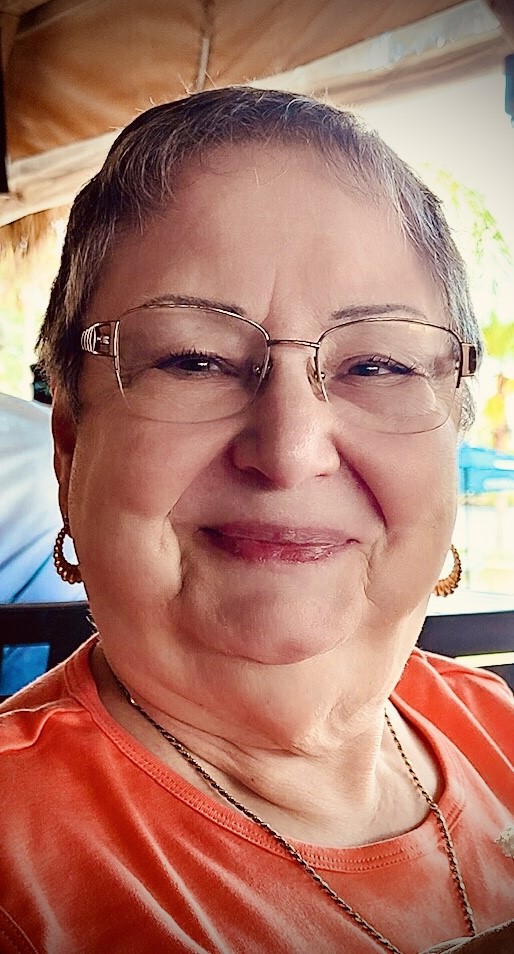
Barbara Cairns
Barbara Cairns is a Connecticut Yankee who became interested in Florida’s history after retiring in 1999. A favorite quote of hers is “Our life is not measured by the number of breaths we take, but by the moments that take our breath away.” Her special moments have happened wherever she has lived . . . in Hampton, CT; Seattle, WA; Goose Bay, Labrador; Bamberg, Germany; the former Canal Zone and Panama City, Panama.
Travels in many places have provided fodder for stories and articles in newspapers and magazines, online sites and in 4th grade readers, in addition to teacher manuals and student workbooks. Since retiring, she has published twelve books in a variety of genres to include picture books, middle grade and YA novels, adult fiction and historical fiction, set in Florida.
A former teacher and retired elementary school principal for Department of Defense Schools, she has volunteered at the Homosassa Springs Wildlife State Park for over 20 years, Barbara also tutors preschoolers, getting them ready for kindergarten. “Once a teacher, always a teacher!”